

As the United States navigates the closing months of 2026, everyday life across the nation is being defined by a distinct mix of economic transition, structural cost pressures, rapid technological integration, and high-stakes policy debates. While headline inflation metrics have moderated compared to the sharp spikes of prior years, households continue to feel the cumulative impact of an elevated price floor on necessities like housing, healthcare, insurance, and groceries.
At the same time, the broader economic landscape presents a complex picture. The national labor market exhibits a “low-hire, low-fire” pattern, artificial intelligence is shifting from corporate experimentation to everyday workplace adoption, and housing accessibility remains a central economic hurdle for families. Understanding these interconnected pressures provides essential context for how Americans are managing their finances, careers, and communities heading into 2027.
Why These Issues Matter as 2026 Nears Its End
The final months of any calendar year often force a reckoning between macroeconomic indicators and household budgets. National economic statistics—such as moderate GDP growth or stabilizing core inflation—do not always match the financial realities felt around the kitchen table. When basic recurring expenses like rent, car insurance, medical care, and electricity remain high relative to wage growth, consumer sentiment can stay guarded even during periods of broader economic expansion.
Beyond individual household finances, policy decisions made in Washington and state capitals directly shape economic momentum. Federal Reserve monetary policy, federal budget negotiations, tax policy adjustments, and evolving trade regulations continuously influence borrowing costs, employment trends, and business investments. Tracking these shifting dynamics offers a clear window into the priorities and concerns shaping public life across the country.
The Cost of Living Remains a Major Concern
While annual inflation rates have cooled significantly from their historical peaks, the primary economic challenge for most households is the level of cumulative prices. A period of lower inflation means prices are rising at a slower pace, not that consumer goods and services have returned to pre-2022 price levels.
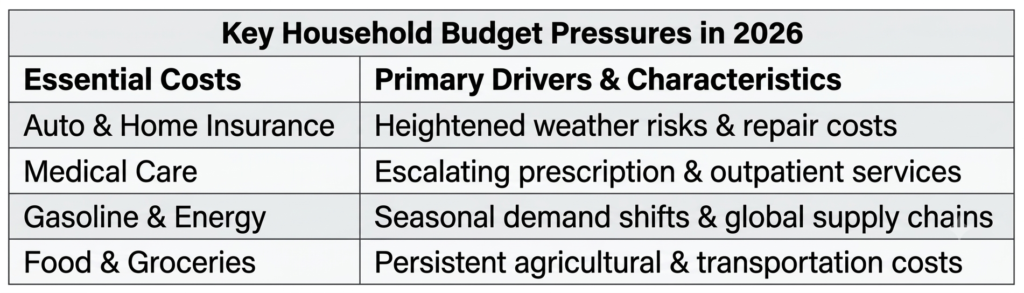

Key Drivers of Everyday Expenses
-
Sticky Consumer Categories: Specific budget categories continue to see upward pressure. Auto and home insurance premiums have risen markedly over recent years due to increased repair costs and climate-related risk pricing.
-
Essential Services: Medical care services and higher education expenses continue to outpace core inflation metrics, absorbing a larger portion of household earnings.
-
Energy Volatility: Fluctuations in crude oil prices and regional electricity tariffs create persistent swings in monthly utility bills and transportation budgets.
For middle- and lower-income families, these sticky costs mean discretionary spending requires careful planning. According to consumer sentiment surveys from institutions such as the Federal Reserve Bank of New York, expected growth in household spending remains cautious as families prioritize debt management and essential monthly bills over non-essential purchases.
Housing Affordability and the American Dream
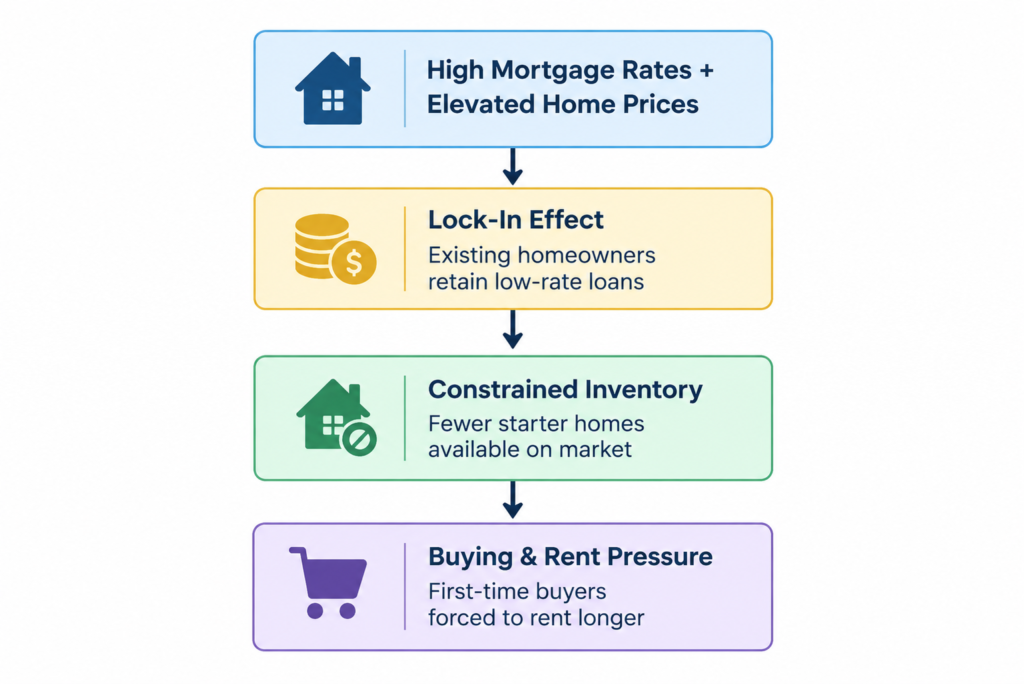
The U.S. housing market remains one of the most stubborn friction points in the national economy. A combination of structural inventory shortages, elevated mortgage rates relative to the prior decade, and high baseline home prices has created a challenging environment for prospective buyers and renters alike.

Homeownership Challenges
Many current homeowners who secured mortgage rates near 3% during 2020–2021 remain reluctant to sell and take on a new mortgage in the 6% range. This “lock-in effect” keeps total resale inventory constrained across many metropolitan regions. While housing starts have helped in select Sun Belt markets, national inventory levels remain below long-term historical norms needed to meet buyer demand.
Rental Market Realities
In the rental sector, conditions vary considerably by geography. Regions that experienced rapid multi-family construction over the past two years have seen apartment rent growth plateau or slightly decline. However, in major urban hubs and dense suburban markets where new construction has lagged, rent growth continues to outpace overall wage growth, absorbing a substantial share of income for young professionals and families.
Jobs, Wages, and the Changing Workplace
The American labor market in late 2026 is best characterized by stability alongside reduced mobility—a dynamic economists often describe as “low-hire, low-fire.” Unemployment remains near historical baseline averages, and mass layoffs remain localized rather than systemic. However, hiring velocity has moderated significantly compared to the rapid turnover seen in earlier years.
What Is Changing in the Workplace?
-
Moderating Wage Growth: Nominal wage gains have cooled to a pace closer to pre-pandemic trends, reducing wage-push inflation pressures while requiring workers to rely on sustained low inflation for real purchasing power gains.
-
Hybrid Work Settlement: Employers and employees have largely reached a balance regarding remote and hybrid work policies. Purely remote roles have consolidated into specific technical and administrative fields, while three-day in-office hybrid schedules have established themselves as the standard in corporate environments.
-
Selective Hiring: Organizations across technology, professional services, and finance are exercising greater selectivity in recruitment, focusing hiring budgets on specialized skills rather than general headcount expansion.
Healthcare Costs and Access
Healthcare accessibility and overall costs remain central concerns for American families, employers, and policymakers. As open enrollment periods approach late in the year, households across the country review health plan options facing renewed increases in premium rates and deductible structures.
Structural Pressures on the Healthcare System
-
Rising Premium Costs: Employer-sponsored insurance plans continue to adjust to higher baseline expenditures for inpatient and outpatient care, passing a share of these costs to workers through adjusted deductibles and copayments.
-
Prescription Drug Spending: The rapid growth in demand for advanced therapeutics, including GLP-1 weight-loss and diabetes treatments, has expanded treatment options while introducing substantial cost pressures for public and private health plan sponsors.
-
Rural and Suburban Access: Facility closures and consolidation among hospital networks continue to affect healthcare delivery, particularly in rural regions where distance to specialized care remains a growing logistical hurdle.

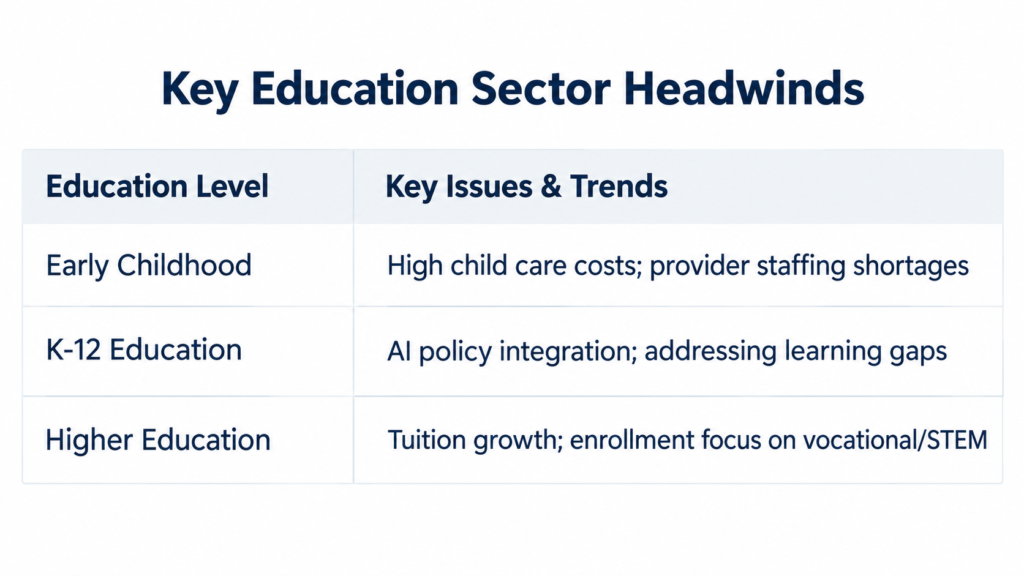
From early childhood education through post-secondary degree programs, the educational landscape faces evolving financial and technological realities.
Student Debt and Higher Education Value
The discussion surrounding higher education continues to focus on total cost versus long-term economic return. While federal income-driven repayment frameworks provide relief mechanisms for many borrowers, overall student loan repayment obligations remain a significant factor in young adults’ ability to save for homeownership or retirement. Simultaneously, enrollment trends show growing student interest in targeted vocational certifications, technical trades, and STEM disciplines that offer clear paths to stable employment.
Immigration and Border Policy
Immigration policy remains a prominent political, economic, and operational priority at federal, state, and local levels. Policy debates continue to focus on balancing border security, humanitarian processing capabilities, and national labor force requirements.
Economic and Community Implications
-
Labor Force Dynamics: Key domestic industries—including agriculture, residential construction, hospitality, and elder care—continue to highlight their reliance on consistent access to legal labor streams to meet operational demands.
-
Municipal Resource Management: Major metropolitan centers and border communities manage ongoing administrative obligations related to temporary shelter, public health services, and educational enrollment for incoming migrant populations.
-
Policy Debates: Legislative discussions in Washington focus on comprehensive framework updates, ranging from legal visa processing limits and asylum system reforms to enhanced technology infrastructure along border corridors.
Artificial Intelligence and Everyday American Life
Artificial intelligence has transitioned from theoretical software capabilities to visible operational tools across consumer services, professional workflows, and public infrastructure.
The Emerging Impact of Workplace AI
Rather than causing widespread immediate job displacement, generative AI and autonomous tools are primarily altering job duties and efficiency standards:
-
Professional Services: Legal, financial, and administrative support roles increasingly rely on automated tools for document drafting, data analysis, and customer interaction triage.
-
Industrial and Logistics: Advanced automation and predictive software continue to streamline supply chain routing, warehouse inventory management, and manufacturing quality control.
-
Skills Adaptation: Educational institutions and corporate training programs are increasingly integrating “AI literacy” into professional development, prioritizing human oversight, critical evaluation, and domain expertise alongside technological tools.
Energy, Climate, and Environmental Challenges
Energy security, grid reliability, and environmental resiliency represent major operational challenges for utilities, regional planners, and consumers.
Balancing Grid Reliability and Clean Energy
The demand for electric power across the United States is experiencing significant growth, driven by the expansion of data centers supporting artificial intelligence, domestic high-tech manufacturing facilities, and the incremental adoption of electric vehicles.

Regional grid operators face the dual task of integrating renewable energy sources—such as utility-scale solar and wind—while maintaining base-load capacity through natural gas and nuclear facilities to ensure uninterrupted service during extreme weather events. For consumers, these necessary infrastructure investments are reflected in updated utility rate structures across many states.
Political Debates and Policy Uncertainty
As federal and state governments address these compounding issues, legislative debates remain highly competitive. Policy approaches to national debt management, international trade tariffs, healthcare regulation, and environmental oversight vary significantly depending on legislative coalition structures.
Key Policy Areas Under Scrutiny
-
Fiscal and Tax Policy: Discussions surrounding the expiration or extension of key provisions from major tax legislation continue to shape corporate investment plans and personal financial strategies.
-
Trade and Tariffs: The implementation and adjustment of import tariffs on industrial inputs, foreign electronics, and consumer goods remain a central focal point for businesses managing supply chain logistics.
-
Regulatory Frameworks: Federal agencies continue to refine oversight rules regarding digital asset markets, artificial intelligence safety, and corporate competition standards.
What Americans Could Be Watching Through the End of 2026
As the year comes to a close, economic analysts, business leaders, and households will be observing several key metrics and milestones to gauge economic health entering 2027:
-
Federal Reserve Interest Rate Decisions: The trajectory of the federal funds rate will directly influence consumer credit card interest rates, auto loans, home equity lines of credit, and fixed-rate mortgages.
-
Holiday Retail Spending: Late-year consumer spending patterns will provide a definitive benchmark regarding household financial health and consumer confidence.
-
Corporate Hiring and Budgeting: Year-end corporate headcount planning will indicate whether the current “low-hire” environment persists or shifts toward renewed labor demand in early 2027.
-
Energy Market Trends: Global oil production decisions and winter heating demand will shape regional household utility costs through the winter months.
The issues shaping American life in the final months of 2026 reflect a nation navigating structural economic normalization and technological progress. While acute macroeconomic disruptions have eased compared to prior years, the day-to-day focus for most Americans remains centered on practical fundamentals: managing housing costs, securing stable healthcare, adapting to changing workplace technologies, and maintaining purchasing power.
As the nation moves toward 2027, the interplay between household spending, federal fiscal policy, monetary decisions, and technological adoption will determine the trajectory of national prosperity and individual economic stability. Maintaining a balanced perspective grounded in reliable data and economic reality remains the most effective way to evaluate these evolving developments.
-

-

-

-

